
Tech Startups: From Concept to Market Launch of a Hardware Product
Tech Startups: From Concept to Market Launch of a Hardware Product
Do you have an innovative product idea, but aren't sure yet how to turn it into a tangible, reliable, and marketable product?
This is a common question among tech startups developing hardware. Between a good idea and a product ready for the market, there are several critical steps: validating feasibility, designing a prototype, defining an MVP, planning for mass production, and then preparing for manufacturing. It is precisely along this path that Quimesis supports project leaders, drawing on its cross-disciplinary expertise in mechanics, electronics, and programming.

Hardware and software: two very different paths
In software, it’s often possible to quickly release an initial version and then continuously improve it. In hardware, things are decided much earlier. A mechanical choice influences the electronic integration. A choice of components can impact cost, availability, reliability, or certification. A decision made too quickly at the prototype stage can slow down the entire rest of the project. A physical product must not only work in theory; it must also be able to be assembled, tested, reproduced, and used under real-world conditions. This is what makes the hardware approach more demanding, but also more foundational.
From idea to product: the key steps
- Clarify the idea
Before designing anything, you need to define the scope of the project. What problem does the product solve? What is it intended for? What are the technical, budgetary, or regulatory constraints?
This first step is essential because it allows you to test the idea before committing time and resources. It also helps avoid a common pitfall: rushing to develop a fully-fledged product before the fundamentals have been validated. It is often at this stage that external guidance provides the most clarity.
- Design a prototype
A prototype is used to turn an idea into something tangible. It is not yet the final product, but rather a first step toward validation.
This phase allows you to test a technical concept, put the idea to the test, identify initial obstacles, and verify that the initial choices are sound. In a hardware project, prototyping is not just about “building a mock-up.” It’s already about starting to make decisions that will shape the project moving forward.
- Develop an MVP
Once feasibility has been more firmly established, the challenge becomes focusing development on what matters most. The MVP doesn’t have to do everything. It must credibly demonstrate the product’s value, while maintaining the right level of simplicity.
For a startup, this step is crucial. It allows the company to move forward with a realistic version of the product, gather valuable feedback, better prioritize development efforts, and avoid investing too early in secondary features.
- Preparing for industrialization
This is often the most underestimated step. Yet it is this step that transforms a prototype into a real product.
A working prototype in the testing phase is not yet a market-ready product. The next steps involve considering manufacturing, assembly, repeatability, reliability, maintenance, production costs, supply chain management, and, where applicable, certification. At Quimesis, we can provide this support at any stage of the project, from concept development through to mass production.

The most common mistakes
In hardware projects, certain errors occur frequently. The first is rushing toward a “finished” product without sufficiently validating its feasibility. The second is underestimating the interdependence between disciplines: mechanical, electronic, and embedded software systems cannot be considered in isolation. The third is delaying industrialization considerations until too late, when they should actually influence decisions from the very earliest stages.
The result: costly iterations, delays, or a product that works as a prototype but becomes difficult to manufacture properly.
Why Technical Support Shapes the Course of the Project
When developing a hardware product, having a good idea isn’t enough. You also have to make the right decisions at the right time.
This is where multidisciplinary support really comes into its own. It allows for faster validation of what needs to be validated, earlier identification of risks, better budget management, and moving the project forward with a clearer vision of the path to commercialization. Quimesis specifically supports this type of journey: transforming an innovative idea into a prototype, then into a marketable product, while providing support in design, industrialization, certification, and production.
Three concrete examples
With Soliseco, the challenge was not simply to develop yet another device, but to create a solution capable of converting excess solar energy into hot water and heating without major modifications to existing systems. This type of project clearly illustrates the reality of hardware development: it is necessary to design a solution that is technically sound, yet easy to integrate, reliable in use, and consistent with future commercial deployment.
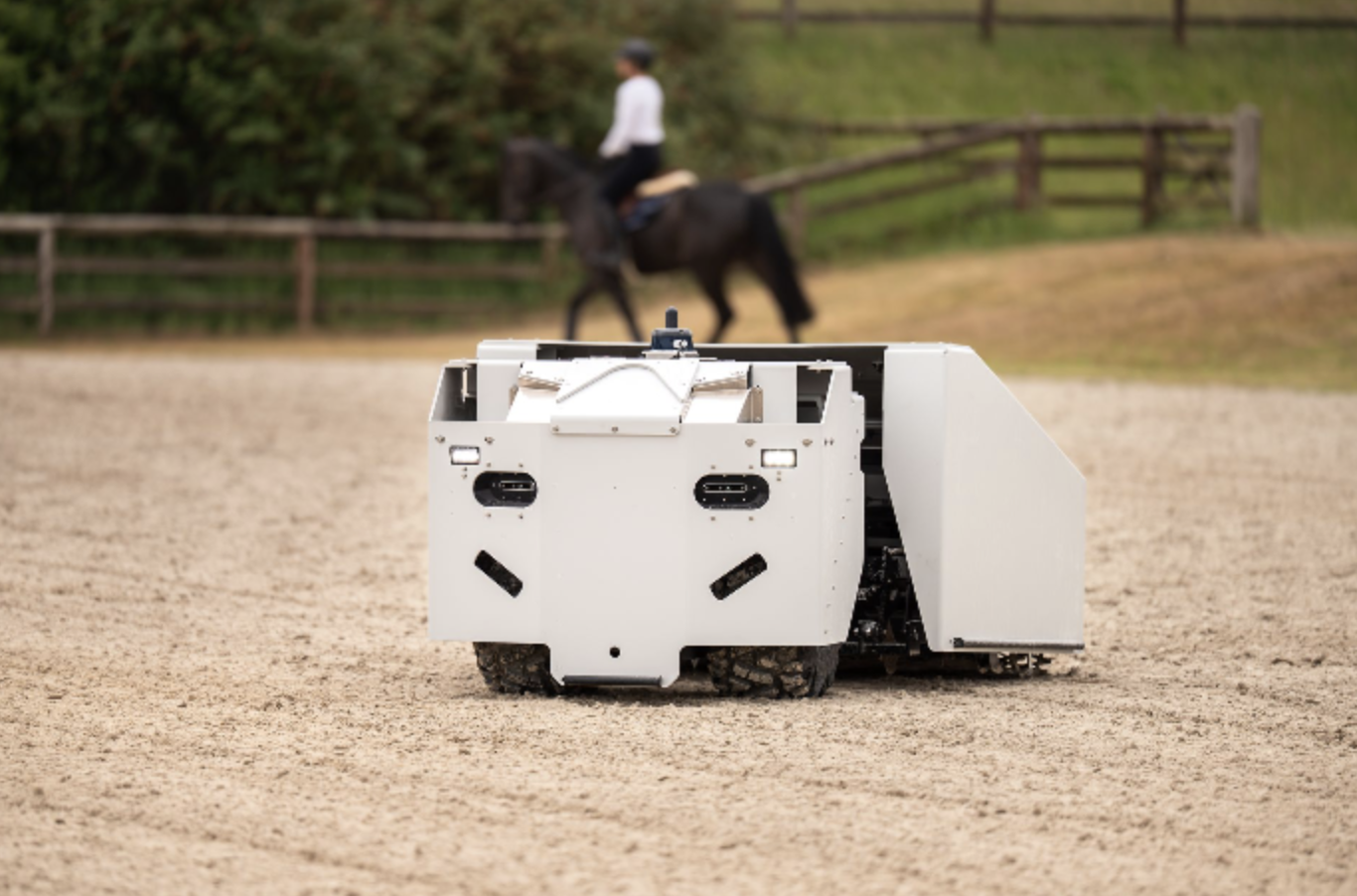
With HarrowBot, we’re in a different league—that of an autonomous robot designed for maintaining equestrian trails. Here, the product’s value lies not only in technological innovation but in its ability to deliver consistent results in the field, featuring sensors, obstacle-avoidance capabilities, true autonomy, and operational logic tailored to equestrian facilities. This is exactly the kind of project where moving from an idea to a marketable product requires much more than a good concept: it requires robust execution.
With Greenzy, finally, the challenge was yet another: to develop a connected, stylish, and odor-free indoor composter capable of meeting the demands of everyday use. The project’s history clearly illustrates its progression through several stages of development, starting with an initial prototype, followed by a more refined second version developed in collaboration with Quimesis on the engineering side. It’s a good example of what many hardware startups go through: between the initial idea and a product ready to win over the market, the concept must be structured, tested, improved, and gradually transformed into a credible product.
Turning an idea into a product, step by step
In hardware, a good idea doesn’t become a product by chance. It becomes one because it has been defined, validated, prototyped, tested, and prepared for the next steps.
This approach helps avoid false positives, reduce risks, and move toward market launch with greater confidence.
Are you developing a hardware product? The right support from the very beginning can save you a lot of time, help you avoid costly mistakes, and lay a solid foundation for the future. At Quimesis, every project follows the same approach: we start by understanding your idea, assessing its feasibility, and then working with you to map out the best path to bring it to market.
Contact us for a personalized feasibility study: https://quimesis.be/contact/

Posted on April 24, 2026