

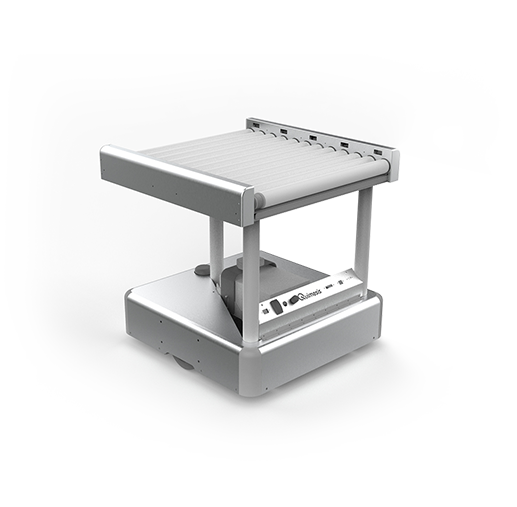
AGV
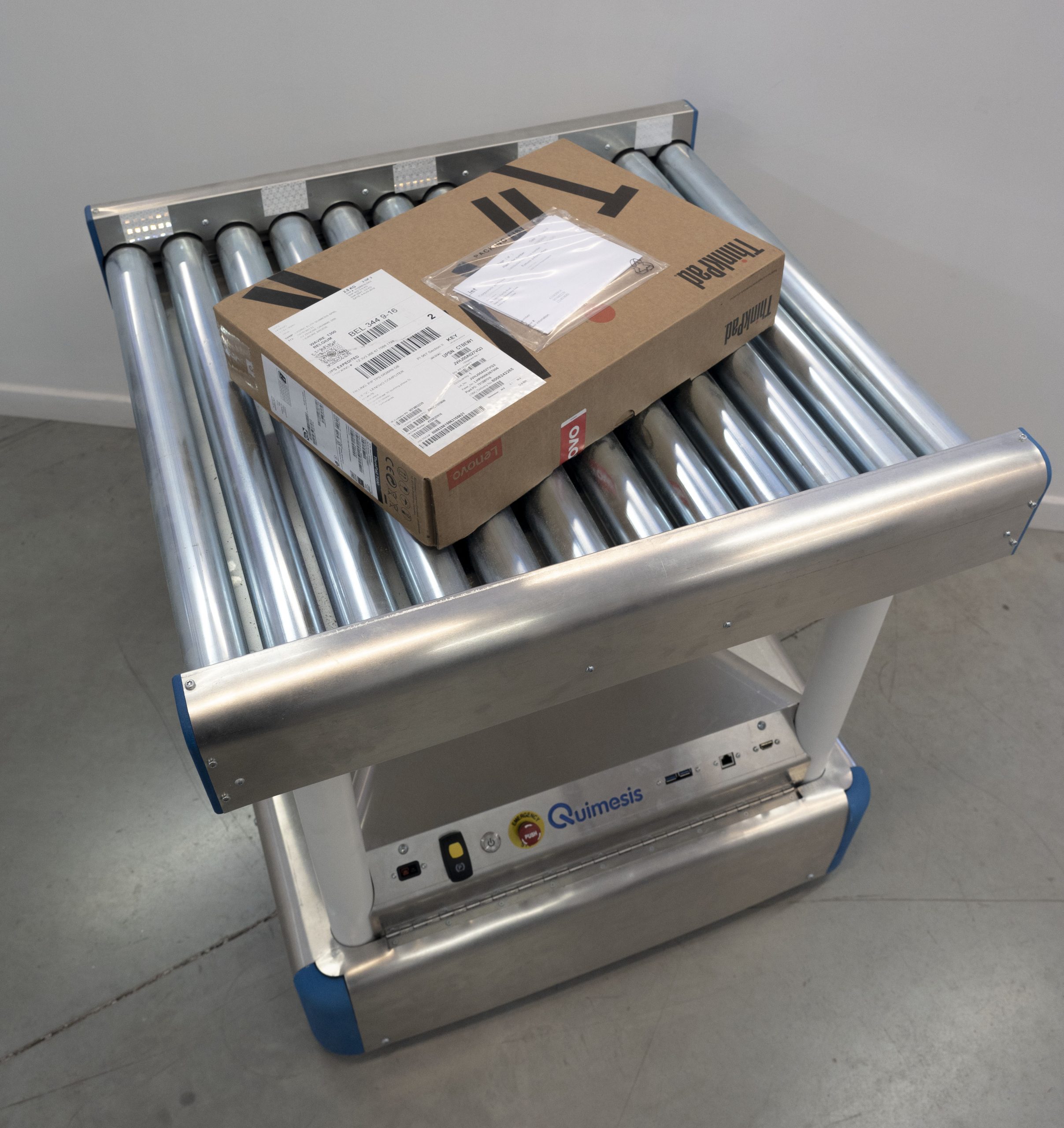
Quimesis has developed an autonomous robot capable of sorting packages more efficiently than using conventional belt conveyors. 24/7, 150 robots moving at 3m/s to sort your packages.

100% Autonomous Postal Sorting Robot
Who?
Quimesis, in partnership with ISITEC (France), specializes in the development of a new robotic platform. Our vision is to bring about disruptive change across various key sectors of the economy by working with industry leaders to usher in the Fourth Industrial Revolution.
For whom?
Within this philosophy, one of the sectors addressed is the supply chain. Specifically, the focus is on sorting centers as part of the chain.
Currently, packages are sorted from the time they come off the planes until they are loaded onto trucks using multi-level automated roller conveyor systems. These systems are very costly and lack flexibility. During peak periods, it is not possible to temporarily expand the facility. And when activity is low, such machinery is unnecessary. Furthermore, there is also a risk of a complete chain blockage if a package is not recognized.
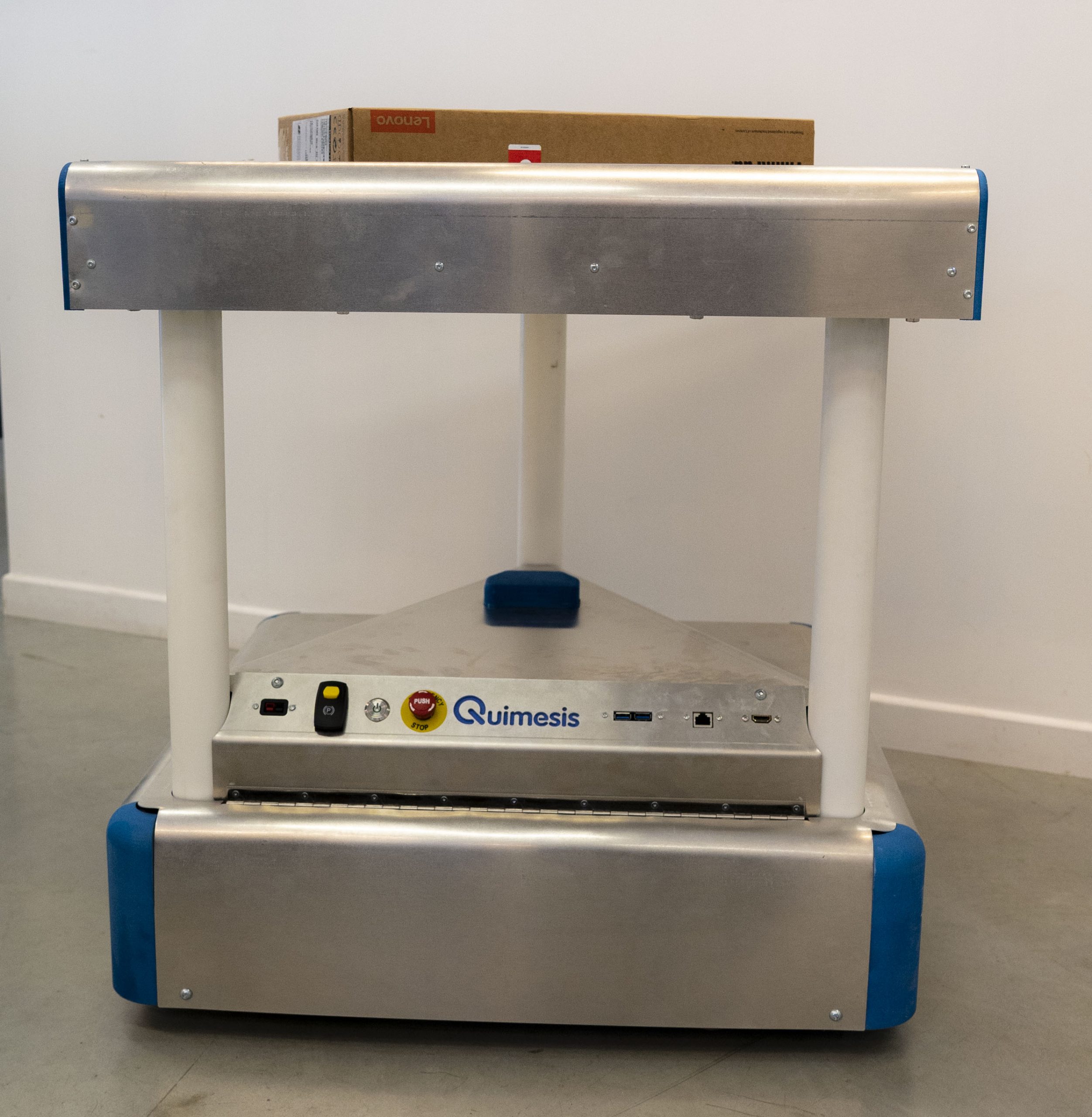
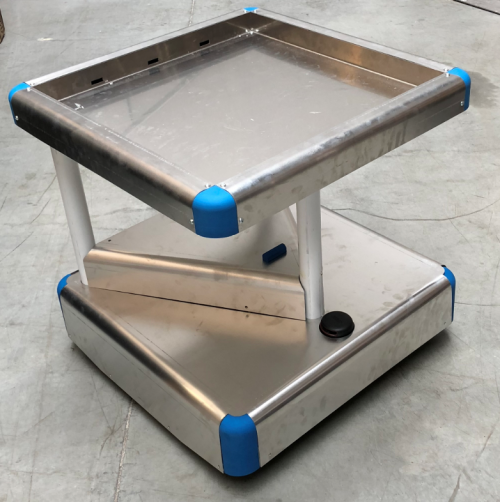
To address these challenges, Isitec and Quimesis have developed a “sorting robot.” The goal is to create mobile robots capable of locating themselves indoors and navigating based on the package they are carrying and the positions of other robots in the area. The group of robots operates like a swarm of bees. These robots move at 3 meters per second and can carry up to 35 kg. For reference, a sorting center that needs to sort 10,000 packages per hour would require 150 robots.
Development
When the project started, Isitec went looking for a technology partner that could be responsible for the design of such a robot.
Quimesis came into play and a partnership was sealed.
Thanks to the artificial intelligence built into each robot, it will be able to navigate its environment, recognize packages, deliver them to the right location, and avoid other robots.
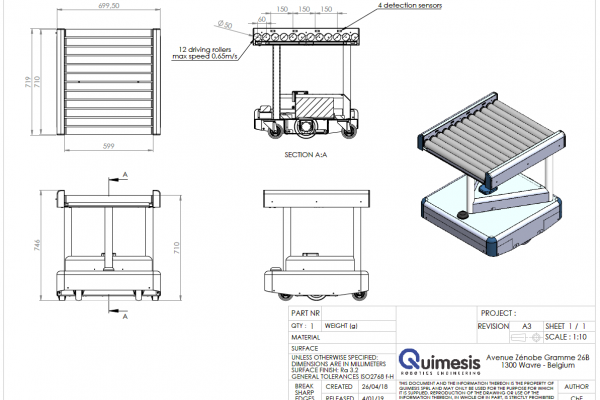
This project involves a wide range of aspects, including power mechanics—that is, the motors, the battery power supply, the wiring, the selection of materials for the robot’s frame, and the implementation of safety systems. As for the electronics, we had to install a spatial recognition and obstacle detection system using LiDARs, and interface a whole series of sensors, such as those that detect the presence of a package and those that determine its weight.